1904
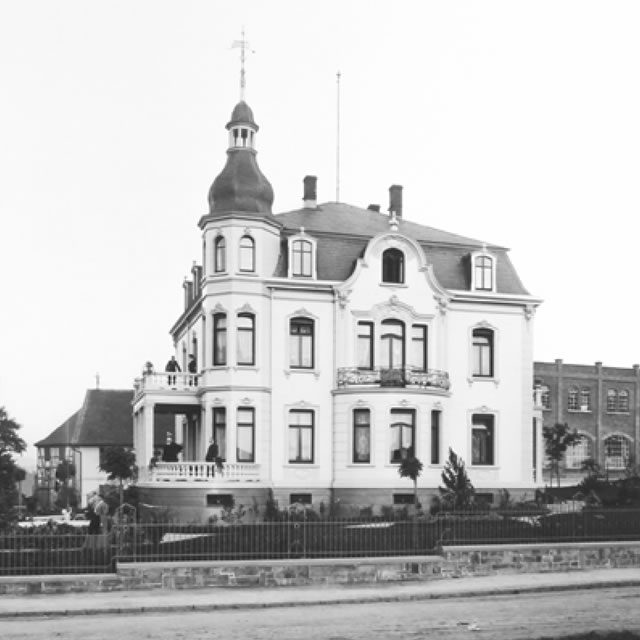
Villa Raab as an example of the splendor of its era
1904A villa as a town monument
Since the end of the 19th century, the history of the city of Alsfeld has been closely linked to the history of monument preservation in Hesse. The first Hessian building design and monument protection statute, enacted in Alsfeld in 1902, as well as the many examples of remarkable individual monuments, are a unique feature. Numerous buildings from the Wilhelminian era (Gründerzeit) and Art Nouveau (Jugendstil) have also been preserved. Among them, the former “Villa Raab” stands out as a prominent urban monument, distinguished by its exceptional quality and architectural design.
With its French palace architecture, the villa—a typical Wilhelminian-style residence from 1904 featuring Art Nouveau and Baroque-inspired elements—served as the prestigious main building and “manufacturer’s villa” for the former Ludwig Raab pipe factory. As a classic example, the villa showcases the full splendor of the Neo-Baroque era, combined with strong and, at the time, very modern Art Nouveau elements. The bourgeoisie of the era, loyal to the Emperor and having attained great wealth, placed particular value on magnificent representation.
The grand villa of manufacturer Ludwig Raab, planned and designed on December 6, 1902, by the architect Otto Leppin from Iserlohn (1850–1937), impressively demonstrated the economic success of the former Ludwig Raab company. The architect employed an architectural complexity that was entirely new to Alsfeld. The villa was completed in 1904. (JW)