1790
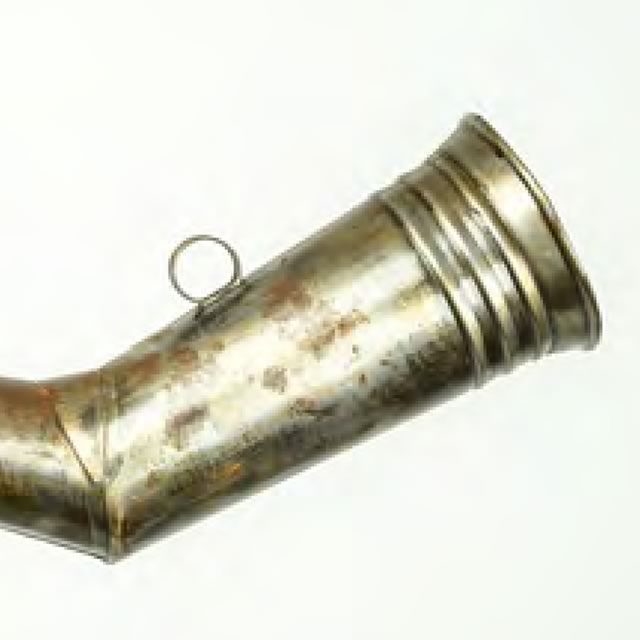

The tin signal horn of the goat herd
1790The horn of the Alsfeld goat herder
Until well into the 20th century, Alsfeld was a typical farming town (Ackerbürgerstädtchen). The cityscape was characterized by agriculture: stacks of wood in front of the houses, manure heaps beside them, and the water of the Liederbach stream flowing through gutters on both sides of the alleys. Many citizens at that time kept one or two goats—known as the “poor man’s cow”—though there were also many actual cows in the stables of the town center, along with pigs and chickens.
The basis for goat keeping was the numerous meadows and fields located outside the city walls, which provided sufficient fodder. Just like the cows, pigs, and sheep, the goats had their own shepherd who drove them out of the city of Alsfeld every morning and back again in the evening.
A historical source describes the Alsfeld goat shepherd in the 1880s as follows: “Old Bramm from Steinborngasse, sprightly, with a wrinkled face, wearing a short blue smock and a dark peaked cap. From one shoulder hung a leather bag containing his modest midday snack; from the other, a tin horn for signaling… In his hand, he held a sturdy staff… His friend and helper was ‘Mohr,’ a long-haired black shepherd dog… Old Bramm knew all the goats. He called them by the names of their male or female owners.” (MNic)