1659
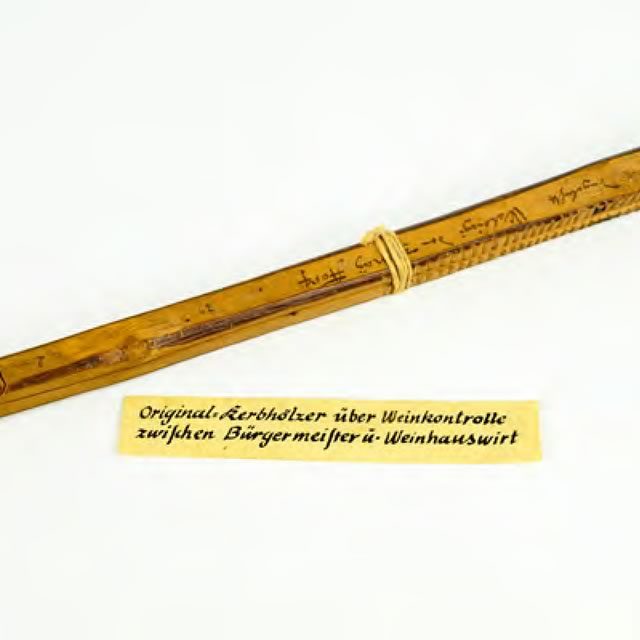

A wooden stick, marked with notches and split lengthwise, served as a traditional technique for recording debts in a tamper-proof manner
1659The tally stick – prehistoric promissory note
On the three pieces of wood, 11–24 cm long and marked with numerous incised notches, the inscription “Wein-Kerb” (wine notch) can still be read. A tally stick, also known as a counting stick, is a manual technique used in our region since the Middle Ages to record debts in a tamper-proof manner. For this purpose, a wooden stick was marked with symbols, usually notches, and then split lengthwise—though not all the way through, but only up to about 5 cm from the other end, where a diagonal cut separated the two pieces. The tally stick was considered admissible evidence in medieval court proceedings.
In Alsfeld, wine played a significantly larger role then than it does today; even before 1414, the city held a wine monopoly, which meant that nearly half of all municipal revenue was generated from the sale of spirits and wine alone! There was a municipal wine house, two wine masters, and a wine innkeeper. Wine was consumed at city council meetings, official city receptions, and also during business transactions (which were sealed by the so-called “Wein-Kauf” or wine purchase). If the councilmen did not pay in cash but instead had the amount “tallied” on the stick, this debt had to be settled later—until then, they literally had “something on their tally stick” (a German idiom meaning to have a record of wrongdoing). (MNic)